Missed Call Text Back for Cleaning Companies: Stop Lost Leads
Missed call text back for cleaning companies keeps hot leads from going cold by replying in minutes and helping you book more walkthroughs.
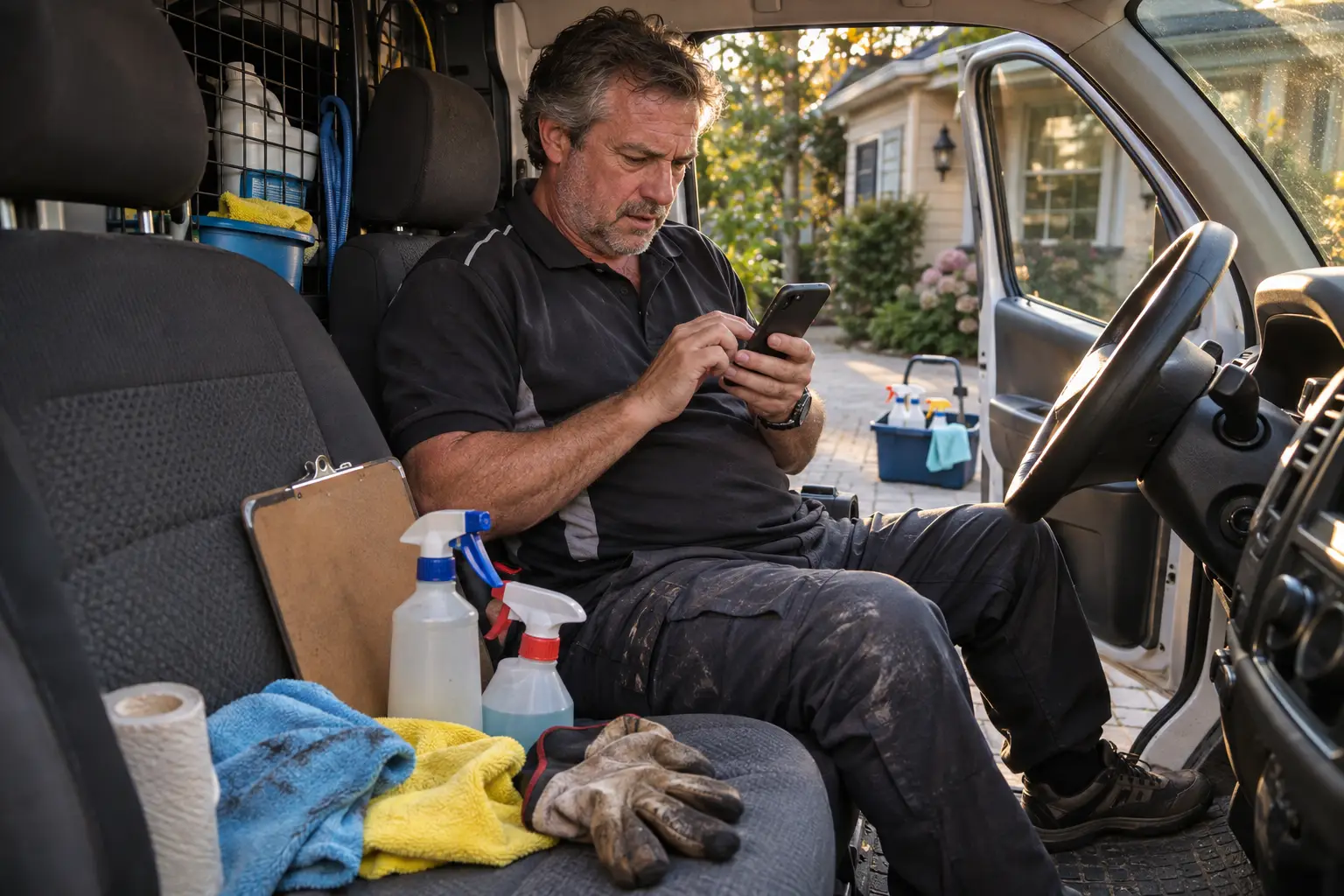
Why do cleaning companies lose jobs after voicemail? Because voicemail adds one more task for a caller who was ready to hire right now.
A missed-call text back helps because it responds in minutes, keeps the conversation alive. Gives the caller an easy next step. For many cleaning companies, that simple handoff is the difference between a booked walkthrough and a cold lead.
Where voicemail loses cleaning jobs
Voicemail isn't useless. It just asks too much at the wrong moment. A homeowner calling about recurring service, a property manager needing a turnover clean, or an office manager asking about janitorial work usually wants motion, not homework.
The problem is friction. The caller has to listen for the tone, leave details, hope the message is clear. Wait for your team to call back. If they also called two other cleaners, your delay becomes someone else's opening.
Cleaning businesses feel this hard because phone coverage often breaks during real work. Crews are on-site. Supplies are being loaded. Keys are missing. Someone is handling reschedules. Meanwhile, the phone rings anyway.
Why Missed call text-back scripts that book jobs for cleaning companies works
Text works because it lowers effort. Instead of asking the caller to try again later, it says you saw the call and gives one easy path forward.
That matters with real phone habits. Pew Research Center found that 67% say they don't answer but would check a voicemail if one is left. Pew Research Center also found that 14% say they generally don't answer and would ignore a voicemail. Even when voicemail gets heard, the customer still has to decide what to do next. A text shortens that gap.
For a cleaning lead, one short exchange can move things forward fast. You may only need the ZIP code, service type, and whether they want a callback or estimate visit. That's often enough to keep momentum without forcing phone tag.
How evening shifts and field work cause missed calls
Many owners think missed calls happen because the team is disorganized. Often, they're built into how cleaning work happens.
The U.S. Bureau of Labor Statistics notes, "Because office buildings are often cleaned while they are empty, many cleaners work evening hours." That detail matters more than it seems. Calls can come in while crews are driving to commercial jobs, unlocking buildings, or wrapping up late work when nobody is sitting at a desk.
Consider a small cleaning company with one office person. During the day, that person may juggle schedule changes, access issues, crew questions, and customer messages. During evenings, there may be nobody assigned to answer new inquiries at all. Voicemail catches the call, but it doesn't protect the job.
How to fit it into your intake process
The best place for text-back is simple: right after an unanswered inbound call. Don't treat it as a replacement for live answering. Treat it as your backup when live pickup fails.
That setup works best when each channel has a job. Live answering handles callers who need immediate help or are ready to book now. Voicemail stays available for people who prefer it. Text-back closes the dead space between the missed ring and your next human follow-up.
A practical flow usually looks like this: missed call, instant text acknowledgment, clear reply option, then staff follow-up when available. Keep all notes in one thread if you can. That way details from the first contact don't get lost between voicemail, texts, and callbacks.
Where Set Up Missed-Call Text-Back for Your Service Business fits
It fits best at three moments: after-hours calls, busy daytime spikes, and weekend inquiries. Those are the windows where good leads often die from delay rather than bad fit.
Petunia call data gives helpful context here. In Petunia call data from The Cooling Company, a Las Vegas home services business, 29% of inbound calls arrived outside weekday business hours (8am-6pm local time) (Jul-Sep 2026). That isn't cleaning-specific data, but it shows something owners already feel in practice: demand doesn't wait for office hours.
Weekend demand matters too. In Petunia call data from The Cooling Company, a Las Vegas home services business, 11% of inbound calls came in on a Saturday or Sunday (Jul-Sep 2026). If your process starts Monday morning, part of your lead flow is delayed by design.
When voicemail still helps and when text wins
Voicemail still helps when someone wants to explain a detailed need in their own words. A property manager may want to describe access rules or building timing. A homeowner may want to explain a post-renovation clean with several rooms involved.
Text wins when speed matters more than detail at first contact. Most new callers don't need a full intake form right away. They need proof that someone saw their call and can help them take the next step.
There's also a staffing issue here. Harvard Business Review wrote that companies "spend billions of dollars on internet-generated sales leads. Most are far too slow to follow up on them." The same lesson applies to phone leads. Slow follow-up cools interest fast, even if your service is good once you finally connect.
Rules that keep follow-up clear and useful
A missed-call text should feel helpful, not robotic or pushy. Keep it short. Name your business clearly. Mention that you missed their call and offer one simple way to continue.
Avoid stuffing too much into the first message. Don't send five questions at once. Don't paste policy language about deposits or cancellations into the opener either. That kind of message creates more friction instead of less.
Good follow-up also needs internal rules. Decide who owns replies after hours, what gets booked directly by text. Which inquiries must move to a callback or walkthrough first.
What Missed Call Text-Back for Plumbing Leads should say
Keep the message plain and useful. Something like this works in most cases: "Hi, this is [Business Name]. Sorry we missed your call. If you'd like, reply with your ZIP code and cleaning type, or tell us a good time to call you back."
That format does three jobs well. It confirms you're real. It gives an easy reply path. It lets the customer choose between text and phone without forcing either one.
If you handle both residential and commercial work, add only one sorting question at first (not three). If you mostly book estimates before pricing, ask for enough detail to schedule that next step cleanly.
Explore a faster way to handle missed call text back for cleaning companies
Every call you miss while your crew is on a job is a job someone else books. Petunia answers and qualifies your calls, texts back missed callers, books jobs, and follows up on open estimates, so home services owners (plumbers, electricians, roofers, pest control, landscapers, cleaners and more) stop losing revenue to slow response.
Your team keeps working the way it does today. Petunia handles the calls and follow-ups that slip through when everyone is busy, and developers can trigger the same actions through an API.