How a Locksmith Office Handles Rush Calls: 7 Fast Fixes
Locksmith rush call handling gets easier with 7 fast fixes that cut confusion, speed dispatch, and help you book the right job faster.
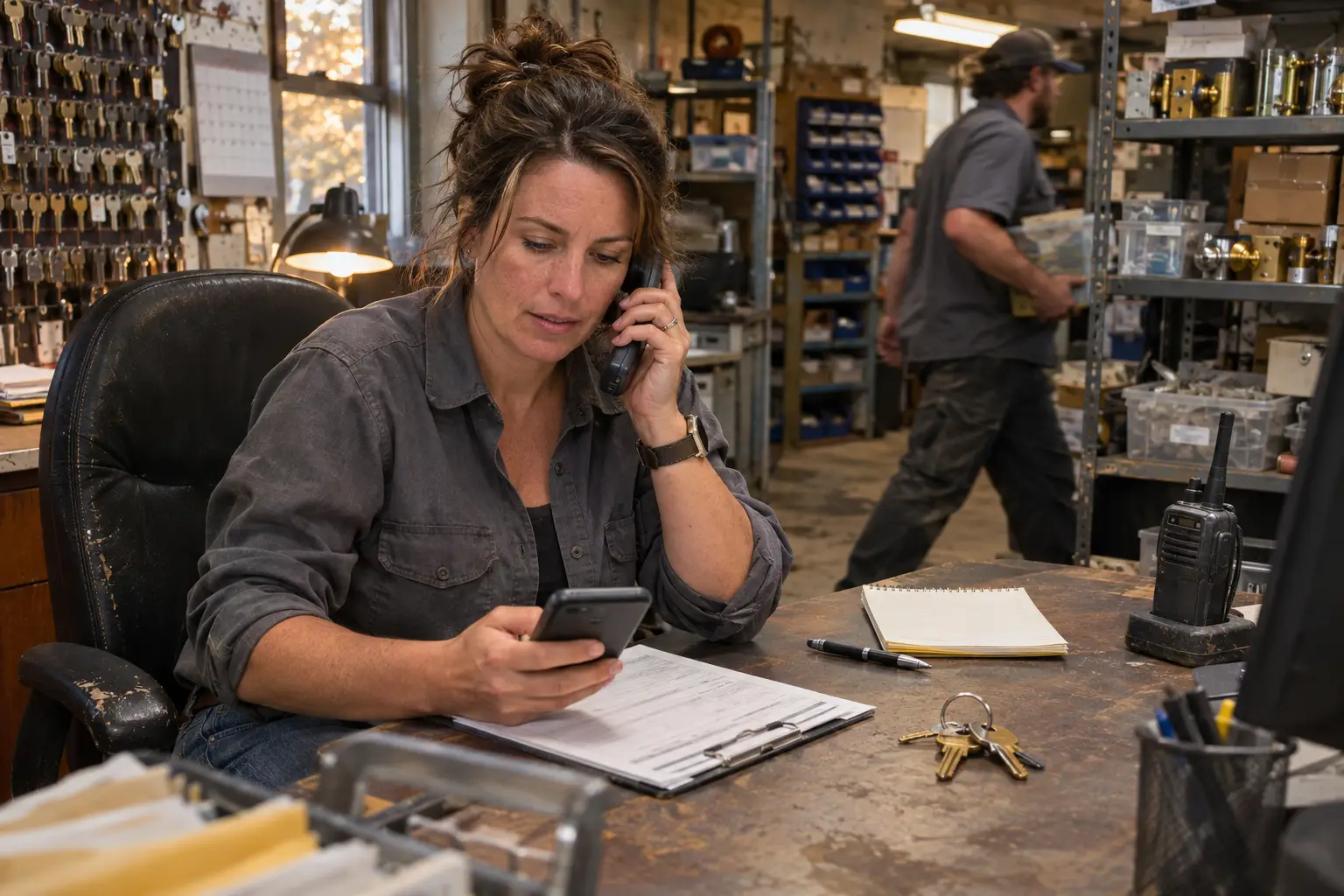
One office treats every rush call like a race and promises a tech before the facts are clear. Another slows down for one minute, checks safety, confirms who can approve entry. Sends the right person with clean notes. The second office usually sounds calmer to the caller, even though it moves just as fast.
Good locksmith rush call handling means doing two things at once. You respond fast enough to win the job, and you verify enough to protect access, timing, pricing, and your team.
Sort locksmith rush call handling fast
The first job is sorting the call, not dispatching it. A rushed intake often creates bigger delays later. The wrong tech gets sent. The office promises a time nobody can hit. Or the caller reaches the site and can't prove they should be let in.
Most shops do better when they use a short intake order that never changes. Start with safety. Then get callback details. Then pin down location. After that, sort the lock problem, check authority, and explain what can and can't be quoted yet.
A simple order helps when three calls land at once. It also helps newer CSRs stay steady under pressure. Rush calls feel messy, but the intake shouldn't.
Screen true emergencies in under 60 seconds
Ask about immediate danger first. If a child or vulnerable person is trapped in a vehicle, or there's another direct safety threat. Should go to emergency services instead of normal dispatch. That question belongs at the top because it changes the whole call path.
After that screen, separate "urgent" from "danger." A stranded driver in a safe place may need quick scheduling, not emergency escalation. A storefront that can't secure at closing may need same-day help because access control matters. Those are different problems, even if both callers say it's an emergency.
Office teams often miss one more point here. Battery life may be low. If the customer is outside, cold, or using someone else's phone, get a reliable callback number early. Don't wait until the end of the call to ask for it.
Verify access rights before dispatch
Speed doesn't remove the need to verify who can request entry or lock changes. In locksmith work, that step isn't red tape. It's part of the service.
Ask who owns or manages the property or vehicle involved. Then ask what proof may be available on site if ID is locked inside. Sometimes the answer is clear right away. Sometimes it isn't, especially with rentals, commercial spaces, shared vehicles, or one partner calling about another's property.
That uncertainty should be documented before dispatch, not left for curbside confusion. A good note might say ID reported inside unit, tenant says manager can confirm by phone, or caller requests rekey for storefront but final approval must come from owner. Those details help your technician know what to expect and when to pause for review.
Dispatch without bad promises
Once you've sorted urgency and authority, dispatch quality matters more than speed alone. Rush jobs go sideways when offices guess on skill fit or arrival time.
Consider a small shop with one tech strong on vehicle work and another better with commercial hardware. Sending whoever is closest may feel efficient at first. Then the job stalls on site because tools, parts, or experience don't match the problem described on the phone.
Clean dispatch starts with three matched facts: site type, lock issue, and technician fit. Residential lockout, lost car key, failed panic hardware at a storefront closing time, each one needs different prep. The office should also note gate codes, parking limits, suite numbers, and any reason access may be delayed on arrival.
Match the tech to the lock and site
The right match saves more time than shaving one minute off intake. A poor match creates callbacks, refunds, second trips, and angry callers who were promised help fast.
That means your scheduler needs more than an open slot calendar. They need a short skill map for each technician. Which person handles automotive work best? Who's strongest on commercial door security? Who already has nearby jobs but can still absorb one urgent stop without wrecking two other appointments?
In many shops, this knowledge lives in one person's head. That's risky. Write it down in your dispatch process so overflow coverage still works when your usual office lead is out.
Set realistic arrival windows after hours
After-hours rush calls are where wishful promises do real damage. Customers will forgive a longer window sooner than they'll forgive being told 20 minutes and waiting an hour.
Urgent work also doesn't stop at 6 p.m., weekdays only. In Petunia call data from The Cooling Company, a Las Vegas home services business, 29% of inbound calls arrived outside weekday business hours (8am-6pm local time) from Jul-Sep 2026 (source: Petunia call data). The same data shows 11% of inbound calls came in on a Saturday or Sunday during Jul-Sep 2026 (source: Petunia call data). That isn't locksmith-only data, but most service owners recognize the pattern right away.
Use that reality when you set coverage rules. Decide who handles overflow nights and weekends. Build wider windows after hours because travel time, current job complexity, and callback lag all increase then. Say what you know plainly: trip charge applies now, labor depends on inspection, arrival window is a range not an exact minute.
Document the rush so owners can trust it
A rush call should produce one shared record that office staff and technicians both trust. If notes live in texts, memory, sticky notes, and missed voicemails, you'll lose details exactly when tension is highest.
Good records aren't long records. They are complete records. Capture exact location first because "near the back gate" isn't enough when someone is tired or upset. Add callback number, issue type, authorization concern if any exists, pricing basis explained, promised window, assigned tech, and update history.
This is also where Missed call text-back scripts that book jobs matter more than many offices think they do (especially after hours). If nobody answers live during overflow periods and no fast follow-up happens by text or callback where allowed. Lead often disappears before your team even sees it.
Log locksmith rush call handling approvals
Approval notes protect both service quality and trust inside your company. Owners need to know who approved what when timing was tight.
Write down who authorized service if the caller isn't clearly the owner on first pass. Note whether final scope depends on inspection once your technician arrives. If pricing was explained as trip charge plus labor plus possible parts after inspection, log that exact basis so nobody argues later about what was promised.
This step also helps field staff avoid awkward conversations they didn't create. A tech walking into a tense lockout needs clean notes more than clever scripts.
Explore Petunia
Every call you miss while your crew is on a job is a job someone else books. Petunia answers and qualifies your calls, texts back missed callers, books jobs, and follows up on open estimates, so home services owners (plumbers, electricians, roofers, pest control, landscapers, cleaners and more) stop losing revenue to slow response.
Your team keeps working the way it does today. Petunia handles the calls and follow-ups that slip through when everyone is busy, and developers can trigger the same actions through an API.