Call Routing for Restoration Companies: 7 Rules That Win Jobs
Call routing for restoration companies that sends storm, loss, and job-status calls to the right person so you win more jobs and avoid missed leads.
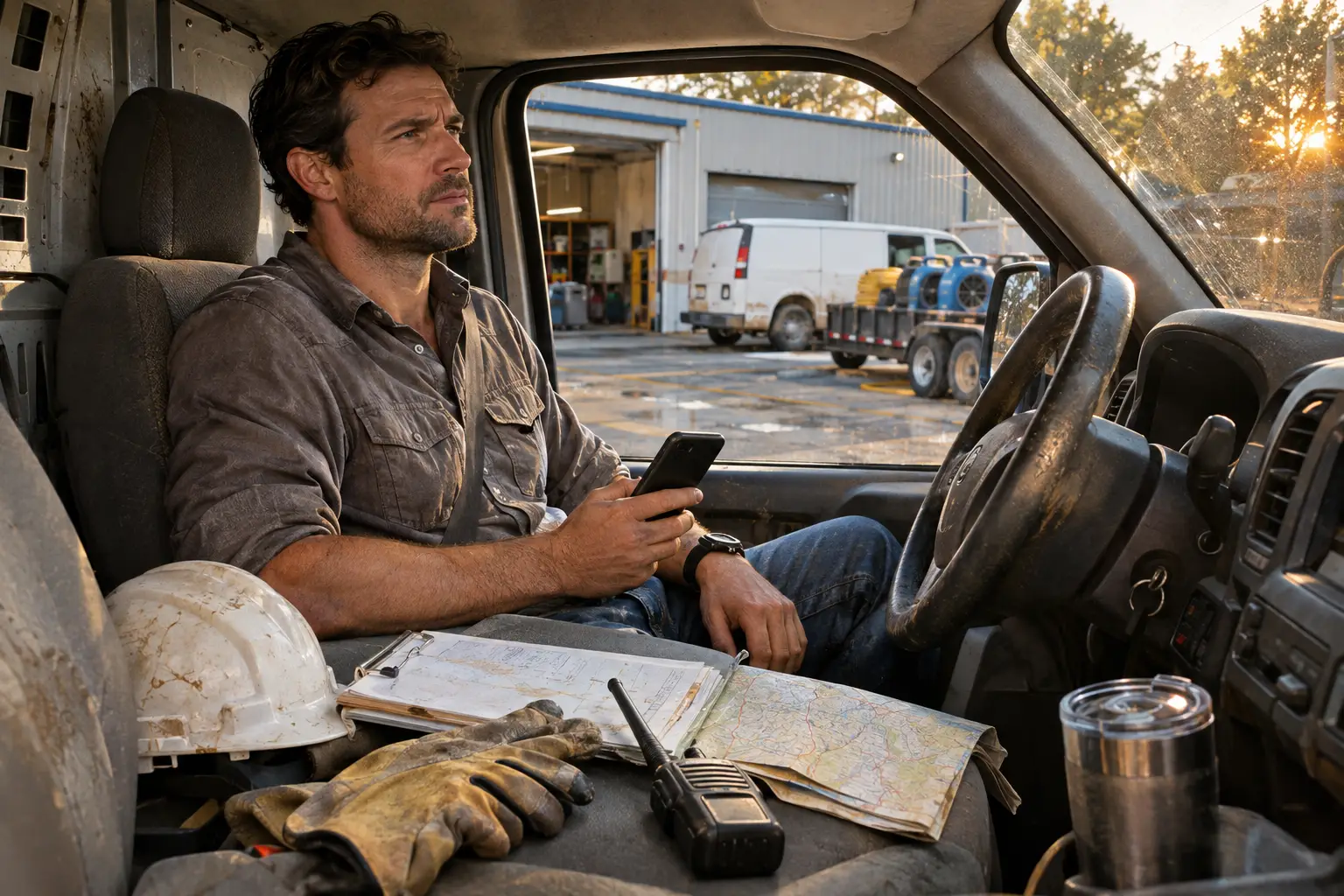
One setup sends every caller to one ringing phone and hopes for the best. The other sorts urgent loss intake, active-job questions, and paperwork calls before they pile up. On a calm day, both can seem fine. After a storm or pipe burst, only one still works.
The short answer is this: good call routing for a restoration company starts with clear call paths by need, not by person. Then you assign an owner, a backup, and a next step if nobody answers.
Map the call paths before the next surge
Most small restoration teams don't need a complex phone tree. They need four or five clear destinations that match real work. The U.S. Small Business Administration says businesses should "automate your phone service to route calls to the right department" (U.S. Small Business Administration). In a smaller shop, that usually means routing by function, not by formal department names.
That's the part many owners skip. They buy phone features before they define where calls should go. If your team can't agree on what counts as emergency intake versus an active-job update, the phones will keep bouncing callers around.
A practical starting set often looks like this:
- emergency loss intake
- existing-job updates
- inspection or estimate scheduling
- billing or insurance paperwork
- vendor, adjuster, or property manager contact
Those paths cover most inbound calls without forcing every caller through the same person. Better yet, they make ownership visible. If a path exists, someone has to own it.
Sort emergency intake from existing job updates
This split matters more than most shops think. A new sewage backup or board-up request needs fast intake and quick handoff. A customer asking about drying equipment pickup needs context from the open job. Sending both calls to the same place slows both down.
Consider a small restoration team after heavy rain. One caller has water coming through a ceiling right now. Another wants to know whether containment will stay up overnight in a job already underway. Both feel urgent to the caller, but they need different handling.
That means your routing rule should separate "help me now" from "help me with an open job." Once you do that, scripts get simpler too. Emergency intake can focus on address, damage type, occupancy, and callback number. Existing-job calls can start with job name, site contact, and project lead.
Define adjuster and property manager routes
Adjusters and property managers create a different kind of urgency. Their calls may not be emergency dispatch calls, but delays still hurt jobs. Miss one adjuster call and you may stall approval steps. Miss one property manager call and you may slow access, tenant communication, or scope decisions.
Many shops bury those callers inside general office routing. That's where confusion starts. Someone takes a message with no claim context, no property name, and no owner assigned next.
A better rule is simple. Give adjusters and property managers their own route or at least a clear prompt inside existing-job support. That way the caller reaches someone who knows how to capture claim details, building access issues, or document requests without starting from scratch.
Call routing for restoration companies that holds up
Strong routing isn't just about where the phone rings first. It also decides what happens when nobody picks up live. Without that second layer, you don't really have a process. You have ringing followed by guesswork.
That gap gets bigger during regional weather events. The U.S. Small Business Administration reported that it handled "more than 900, 000 phone calls in the days following the hurricanes" Harvey, Irma and Maria (U.S. Small Business Administration). Your shop won't see that scale, of course, but the lesson is useful: surge conditions change call handling fast.
Assign a primary owner and a backup for each path
Every path needs two names or two roles attached to it. One is the primary owner. One is the backup owner. If you stop at the primary person, you're still depending on luck.
Route by role first if you can. "Emergency intake lead" works better than "send all water calls to Mike." People get tied up on-site, in crawlspaces, at inspections, or driving between losses. Roles survive schedule changes better than personal habits do.
Write each path in plain language your team can follow:
- who answers first
- how long that person has to answer
- who gets it next
- who owns follow-up if both miss it
That last point matters most after hours. If both people miss the call and nobody owns response within a set window, callers sit in limbo while everyone assumes someone else handled it.
Set after hours, overflow, and phone down rules
After-hours routing can't be an afterthought for restoration work. In Petunia call data from The Cooling Company, a Las Vegas home services business, 29% of inbound calls arrived outside weekday business hours (8am-6pm local time) during Jul-Sep 2026 (Petunia call data). That isn't restoration-specific data, but it does show how much demand can land when office coverage is thin.
Weekend demand matters too. In Petunia call data from The Cooling Company, 11% of inbound calls came in on a Saturday or Sunday during Jul-Sep 2026 (Petunia call data). For restoration teams that already expect odd-hour emergencies, those periods need real rules before phones start ringing.
Set three separate policies:
- after-hours emergency intake
- daytime overflow when staff are busy
- phone-down fallback if lines fail
The fallback plan is often missing entirely. The U.S. Small Business Administration says businesses should "make sure you have up-to-date contact information available remotely for your staff" and may consider "two-way radios or an alert notification system (ANS) if the phone lines are down after a disaster" (U.S. Small Business Administration). For restoration companies working storms and floods themselves, that's operations planning, not theory.
Make routing easy to run on a tough Tuesday
A routing plan only helps if your team can use it under pressure. Fancy logic won't save a messy handoff at 7:12 p.m., when an office manager is gone and your project manager is inside another loss wearing gloves.
Keep rules short enough to remember and clear enough to test. The best setups usually fit on one page with owners, backups, timing rules, and handoff notes for each path.
Track where call routing for restoration companies breaks
Start with failures you can actually see. Which calls hit voicemail too early? Which ones get transferred twice? Which missed calls never get texted back? Which existing customers keep calling because nobody owns updates?
Those breakpoints tell you more than feature lists do. In most small shops, trouble shows up in three places: unclear caller type at answer, no backup owner when someone is tied up. Weak follow-up after missed live contact.
One useful habit is logging transfer reasons for two weeks (keep it simple). If several callers are being moved from general intake to active-job support every day, that's not random noise. It means your first route isn't matching real demand.
Write the handoff steps your team can follow
Handoffs fail when they depend on memory alone. A good note should travel with the call or callback task so the next person doesn't restart the whole conversation.
Use short required fields for each path:
- caller name and callback number
- service address
- new loss or open job
- damage type or reason for call
- who owns next action
- promised callback timing
That structure helps people answer consistently even during rush periods. It also helps developers building software actions for service businesses because routing logic only works when categories are defined clearly enough to trigger action.
The final piece is practice. The U.S. Small Business Administration recommends annual drills because "doing annual drills with your staff will show you what's effective and where your preparedness plans need fine-tuning" (U.S. Small Business Administration). If your team hasn't tested storm surge routing lately, you'll find gaps live instead of on purpose.
If you want help putting these rules into action, Petunia can answer and qualify calls, Missed call text-back scripts that book jobs, book jobs, and follow up on estimates for home services teams using the routing logic you define. For restoration shops juggling urgent intake and active-job updates at all hours, that's often the difference between a clear next step and another dropped handoff. Start your free trial.
You Might Also Like
- Automated Call Answering ROI for Home Service Companies
- Call answering service for HVAC companies
- Missed-call recovery for electrical contractors
- Call routing rules for multi-tech service shops
See how Petunia makes call routing for restoration companies easier
Every call you miss while your crew is on a job is a job someone else books. Petunia answers and qualifies your calls, texts back missed callers, books jobs, and follows up on open estimates, so home services owners (plumbers, electricians, roofers, pest control, landscapers, cleaners and more) stop losing revenue to slow response.
Your team keeps working the way it does today. Petunia handles the calls and follow-ups that slip through when everyone is busy, and developers can trigger the same actions through an API.