Text Back Missed Calls for a Roofing Office: Boost Roofers’ Leads Now
text back missed calls for roofers to keep leak and estimate leads from going cold, with a fast reply that books more jobs today.
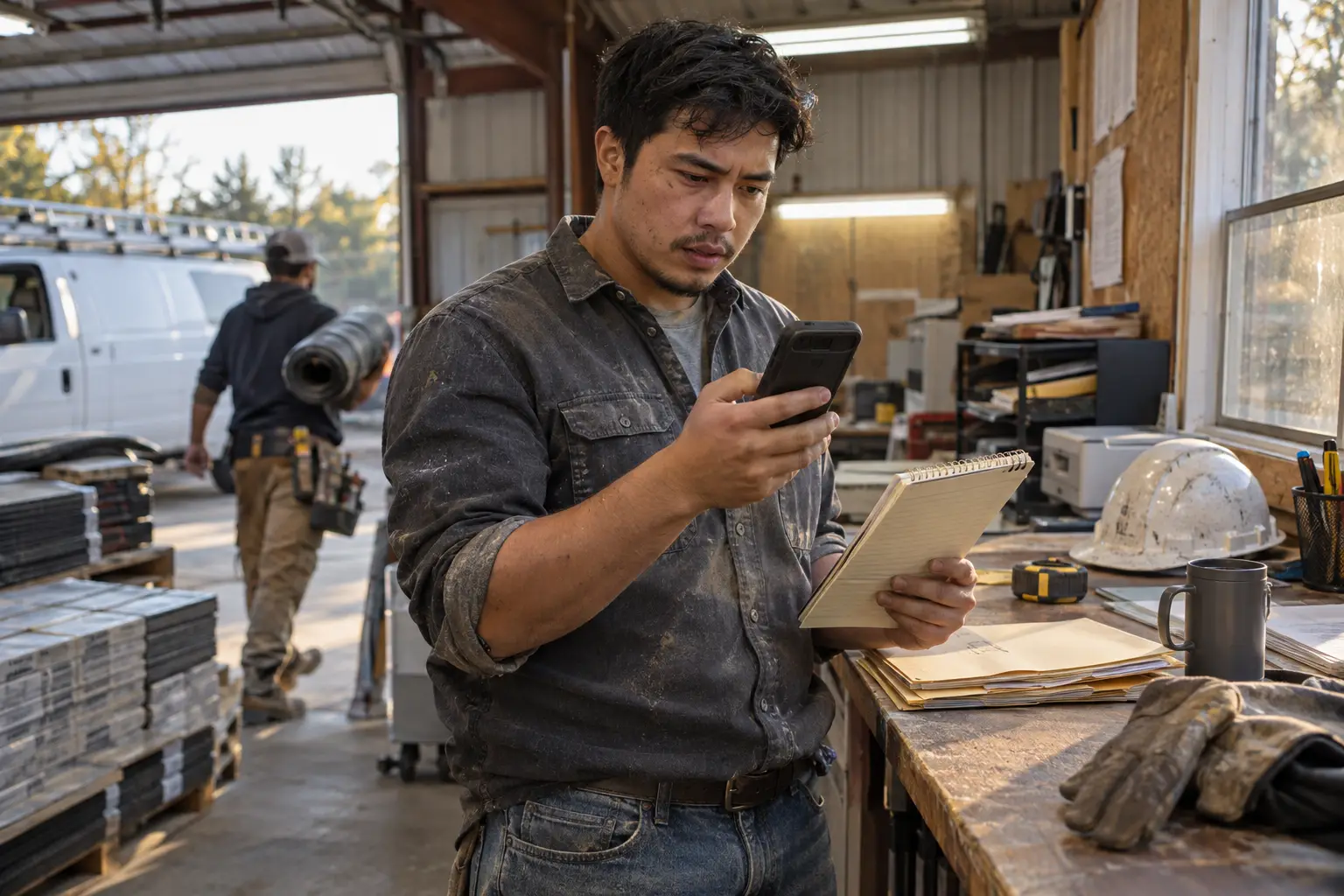
A roofing office can lose good calls for simple reasons. The phone rings while your coordinator is on another line, dealing with a crew change, or sorting out a rain delay. The problem is not just the missed call. It's the silence after it, when a leak caller or estimate prospect moves on.
Yes, missed-call texting can help a roofing office book more work. Only if you set up the staff handoff behind it. The text should acknowledge the call fast, offer a clear next step. Make it easy to request a return call.
When text back missed calls for roofers makes sense
Missed-call texting makes sense when your office misses real opportunities during busy stretches or after hours. It works best as a fast acknowledgment, not as a replacement for answering the phone. A short text buys you time and keeps the conversation alive until someone can take over.
Mobile habits support adding text as one response path. Pew Research Center says "about one-in-four adults say they're on their smartphones 'almost constantly.' Another 60% say they use their smartphone several times a day" (Pew Research Center). That doesn't mean every caller wants to solve everything by text. It does mean a quick message is likely to be seen.
Calls roofing offices miss most often
Roofing offices usually don't miss easy calls. They miss calls that hit at bad moments. Think active leak questions during weather swings, estimate follow-up while staff is calling suppliers, or after-hours calls from homeowners who finally have time to deal with the issue.
Timing matters more than many owners expect. In Petunia call data from The Cooling Company, a Las Vegas home services business, 29% of inbound calls arrived outside weekday business hours (8am-6pm local time) and 11% of inbound calls came in on a Saturday or Sunday (Jul-Sep 2026) (Petunia call data). That isn't roofing-only data, but it is a useful warning for service businesses that rely on live answer during narrow office hours.
Why text back missed calls for roofers helps
The main value is speed. A text goes out right away and tells the caller you saw them. That alone can keep a prospect from calling the next roofer on their list while your team is still tied up.
Still, don't force every caller into texting. Pew Research Center found that "31% said they preferred texts to talking on the phone, while 53% said they preferred a voice call to a text message" (Pew Research Center). For a roofing office, the safer move is simple: send the text fast, then offer an easy way to get a call back.
What to set up before you turn it on
The setup matters more than the feature itself. If no one owns replies, your office has only created another inbox to ignore. If two people can jump into the same thread without seeing each other, you'll get duplicate answers and dropped follow-up.
Before turning anything on, decide who watches new replies, who handles urgent issues, and how bookings get recorded. A missed-call text process should lead somewhere specific. In most roofing offices, that means one person owns first response during office hours and one backup person covers overflow or after-hours review.
Missed call text-back scripts that book jobs message rules
Keep the first message short and useful. Name your company. Acknowledge the missed call. Ask for only what helps your team act next. Then offer a return-call option in plain words.
A good first reply might ask for the service address and a brief note about the problem. That's enough to sort most incoming requests without creating friction. Avoid asking for too much in that first exchange (especially anything sensitive) because callers with an urgent issue often just want reassurance and a next step.
One simple format works well: thank them for calling, say you missed them, ask for address plus a short description. Say they can reply CALL if they'd like a return call. That keeps voice open for people who don't want to type out roof details from work or from inside an active problem at home.
Staff workflow behind Automated Call Answering ROI for Home Service Companies
The weak point is almost never the outgoing text. It's what happens after someone replies. If your office can't see those replies quickly, then speed-to-lead disappears again and the whole setup loses value.
Most teams need three basic rules. First, every reply gets an owner fast. Second, urgent problems get flagged before routine estimate requests. Third, every next step gets logged where the whole office can see it. Without that shared view, one person may promise a callback while another schedules something else.
Consider a simple workflow. New estimate requests go to sales or whoever books inspections. Active leak messages go to whoever handles urgent scheduling first. Existing customer questions may need different routing so they don't clog up new lead response. That's where many offices break down, not in sending texts but in sorting them well.
Contact Petunia
How to choose a system your office can trust
Choose based on handoff and visibility first. Fancy extras won't help if your staff can't tell who replied, what was said. Whether anyone booked the next step. For roofing offices, trust comes from clear ownership and fewer dropped threads.
A solid system should also fit how your team already works on busy days. If staff has to jump between too many tools just to answer one missed caller, response slows down again. The best choice is usually the one that keeps call history, texting, and booking actions close together.
Offer text and call, not text only
This should be non-negotiable for roofing leads. Some callers are fine sending an address and brief note by text. Others need to explain an active issue out loud or simply feel better hearing another person respond.
That preference split shows up in Pew Research Center's findings: 31% preferred texts while 53% preferred voice calls (Pew Research Center). So your message should never trap callers in one lane. Give them both options from the start and make "reply CALL" easy enough that nobody has to guess what happens next.
Explore Petunia
Every call you miss while your crew is on a job is a job someone else books. Petunia answers and qualifies your calls, texts back missed callers, books jobs, and follows up on open estimates, so home services owners (plumbers, electricians, roofers, pest control, landscapers, cleaners and more) stop losing revenue to slow response.
Your team keeps working the way it does today. Petunia handles the calls and follow-ups that slip through when everyone is busy, and developers can trigger the same actions through an API.
Start your free trial or see plans and pricing