Service Business Response Time Standards: 7 Fixes to Save Leads
Service business response time standards that stop missed leads: answer faster, text back quickly, and turn callbacks into booked jobs.
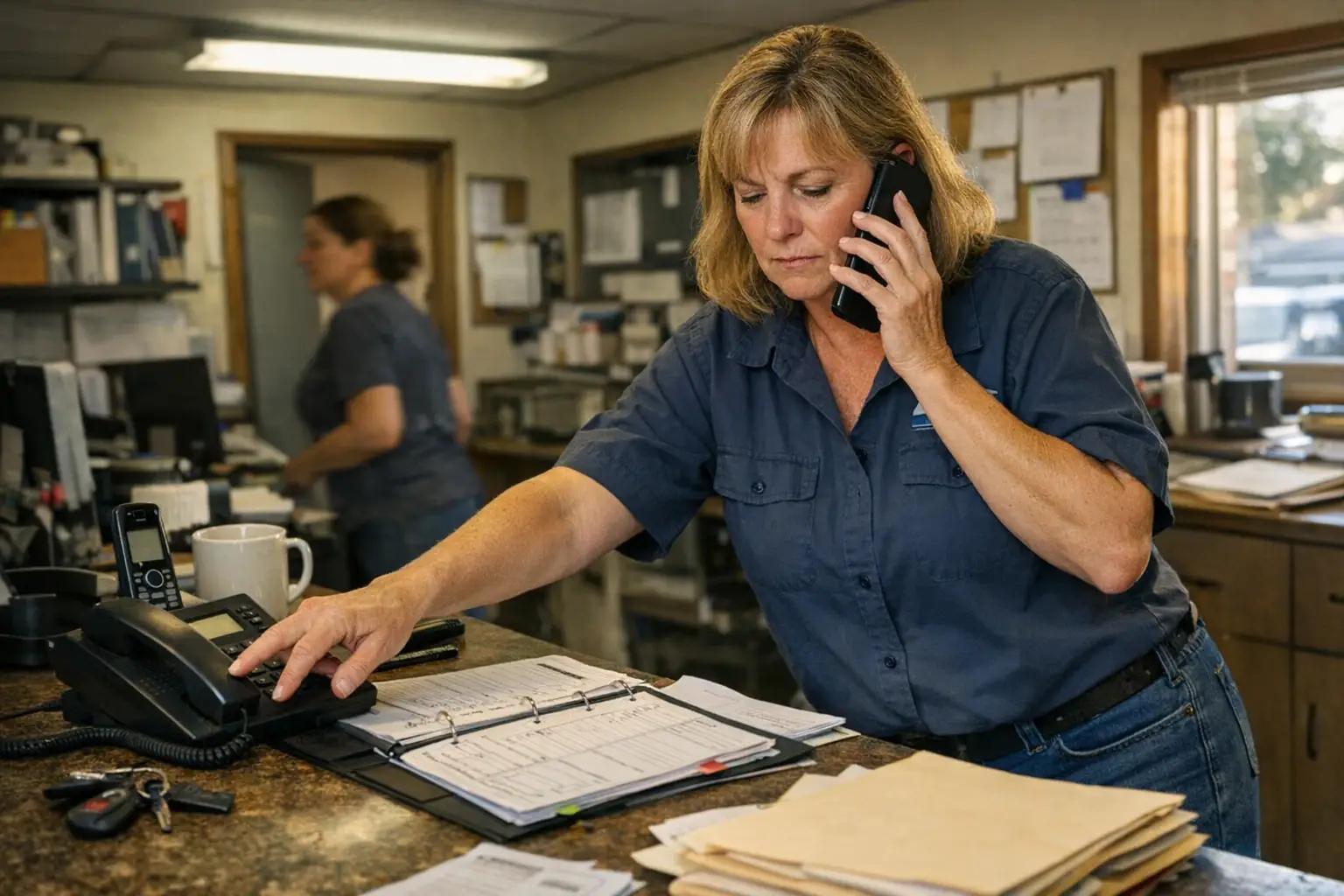
Slow response is not a customer service problem first. It's a revenue leak and, in some cases, a promise problem. In a home services shop, callers don't wait around while your office gets caught up. They call the next plumber, garage door company, pest control office, or cleaner on the list.
A workable standard is simple. Answer calls during posted hours with someone who can help, text back missed callers fast, assign one owner to each next step. Never promise timing your team hasn't checked. That's what "fast enough" looks like in real operations.
Where response time standards break down
Most shops don't lose leads because nobody cares. They lose them because nobody owns the gap between ring, reply, booking, and follow-up. A standard fails when it sounds good on paper but falls apart at lunch, during dispatch rush, or after a storm.
The weak spot is usually a handoff. One person thinks the voicemail was checked. Another thinks the estimator will call back. By late afternoon, the customer has heard nothing clear. That's not just slow. It's unowned work.
Missed call gaps in service business response time standards
Missed calls hurt most when they happen during normal business hours. The Federal Trade Commission says a business must provide "a telephone number that is answered during normal business hours by someone who can answer the consumer’s questions" (Federal Trade Commission). That should shape your staffing plan, not just your legal file.
Consider a small pest control office with one coordinator. The phone rings while they're taking payment, calling a technician, and answering a billing question. Voicemail picks up. If nobody texts that caller back right away or returns the call with a clear next step. Lead often goes cold before lunch.
A practical fix is to treat every missed call as a live lead until proven otherwise. Don't leave it sitting in voicemail with no clock on it. Put missed callers into one queue, assign one owner for that shift. Use approved text replies that move the conversation toward booking. For teams that want a tighter process, Missed call text-back scripts that book jobs can help shape the follow-up.
Vague promises that stall booking
Loose wording causes more delay than many owners think. "We'll get back to you soon" sounds harmless. It gives your office no deadline and gives the customer no confidence. "We'll call by 3 p.m." is much better because someone owns it.
That same issue shows up when staff talk about parts or special-order materials too early. An appliance repair office may want to lock in the job fast. Intake should not promise shipping or arrival timing without checking what operations can actually support. Speed helps only when the promise is real.
Service business response time standards that hold up
Good standards are plain enough to use on a tough Tuesday. They don't need fancy labels or help-desk terms. They need clear owners, short clocks, and wording your team can keep even when three things go wrong at once.
Most small home services teams improve by writing down four rules: who answers live during posted hours, what happens after a missed call, who confirms booked appointments. Who can speak about order or material timing. That's often enough to clean up most delays.
Who owns each step from inquiry to booked job
Start with names, not job titles alone. Someone must own live answer coverage at opening, lunch, and late afternoon. Someone must own missed-call recovery. Someone must own appointment confirmation. If your shop takes applicable product orders, someone must approve any promise tied to shipment or ordered materials.
That structure matters because "same day" isn't an owner. Neither is "the office." On busy days, shared responsibility becomes no responsibility at all. A simple written chain works better: answerer, backup answerer, callback owner, booking owner, then estimator or dispatcher if needed.
For developers building software for service businesses, this is where workflow design often goes wrong. Capturing the lead isn't enough. The useful sequence is answer attempt, fallback text, qualification capture, booking action, confirmation message, and follow-up if no booking happens.
What counts as on time for calls and texts?
On time means fast enough to keep intent alive and specific enough that your team can measure it. For most shops, that starts with live answer during posted hours whenever possible and immediate acknowledgment of missed callers through text or callback assignment.
Avoid vague standards like "we return calls quickly." Use working rules instead. Try: missed calls get a text right away; open callbacks are reviewed before noon and before close; booked jobs get confirmation the same day; estimate requests get a clear next step before the shift ends.
Different job types need different clocks. A locksmith request at night is not the same as a painting estimate for next month. Separate urgent service from routine quotes so your fastest response goes where delay costs you most. If you need a broader frame for those expectations, Speed to lead benchmarks for HVAC and plumbing is a useful reference.
Fixes that protect revenue and trust
If you want standards that hold up under pressure, tie them to two things: coverage reality and promise discipline. That keeps your front office from sounding faster than it really is and stops intake from creating problems downstream.
One useful test is blunt. Pull last week's calls and ask three questions: which were answered live during posted hours. Sat too long after being missed. Which included promises nobody had checked first? Those three buckets usually show exactly where your process breaks.
FTC phone coverage and service business response time standards
Phone coverage isn't just etiquette. The Federal Trade Commission says businesses need "a telephone number that is answered during normal business hours by someone who can answer the consumer’s questions" (Federal Trade Commission). For a small electrical or garage door shop, that's an operating rule worth using even outside formal compliance talk.
Posted hours should match real coverage. If your site says you're open until 5 p.m. Phones reliably roll to voicemail at 4:15 while everyone wraps dispatch, you're overpromising every weekday. Better to fix coverage than hope customers accept silence.
When coverage keeps slipping, outside help can make sense. Petunia fits this kind of gap when you need action taken consistently: answering calls, texting back missed callers, booking jobs. Following up on estimates so leads don't die waiting. Teams comparing options often start with Automated Call Answering ROI for Home Service Companies to weigh the cost of missed calls.
Get started with Petunia for service business response time standards
Every call you miss while your crew is on a job is a job someone else books. Petunia answers and qualifies your calls, texts back missed callers, books jobs, and follows up on open estimates, so home services owners (plumbers, electricians, roofers, pest control, landscapers, cleaners and more) stop losing revenue to slow response.
Your team keeps working the way it does today. Petunia handles the calls and follow-ups that slip through when everyone is busy, and developers can trigger the same actions through an API.