Shared Phone Lead Handling: Stop Dropped Leads Fast
Shared phone lead handling keeps every missed call owned and logged, so contractors stop losing jobs between handoffs and call back faster.
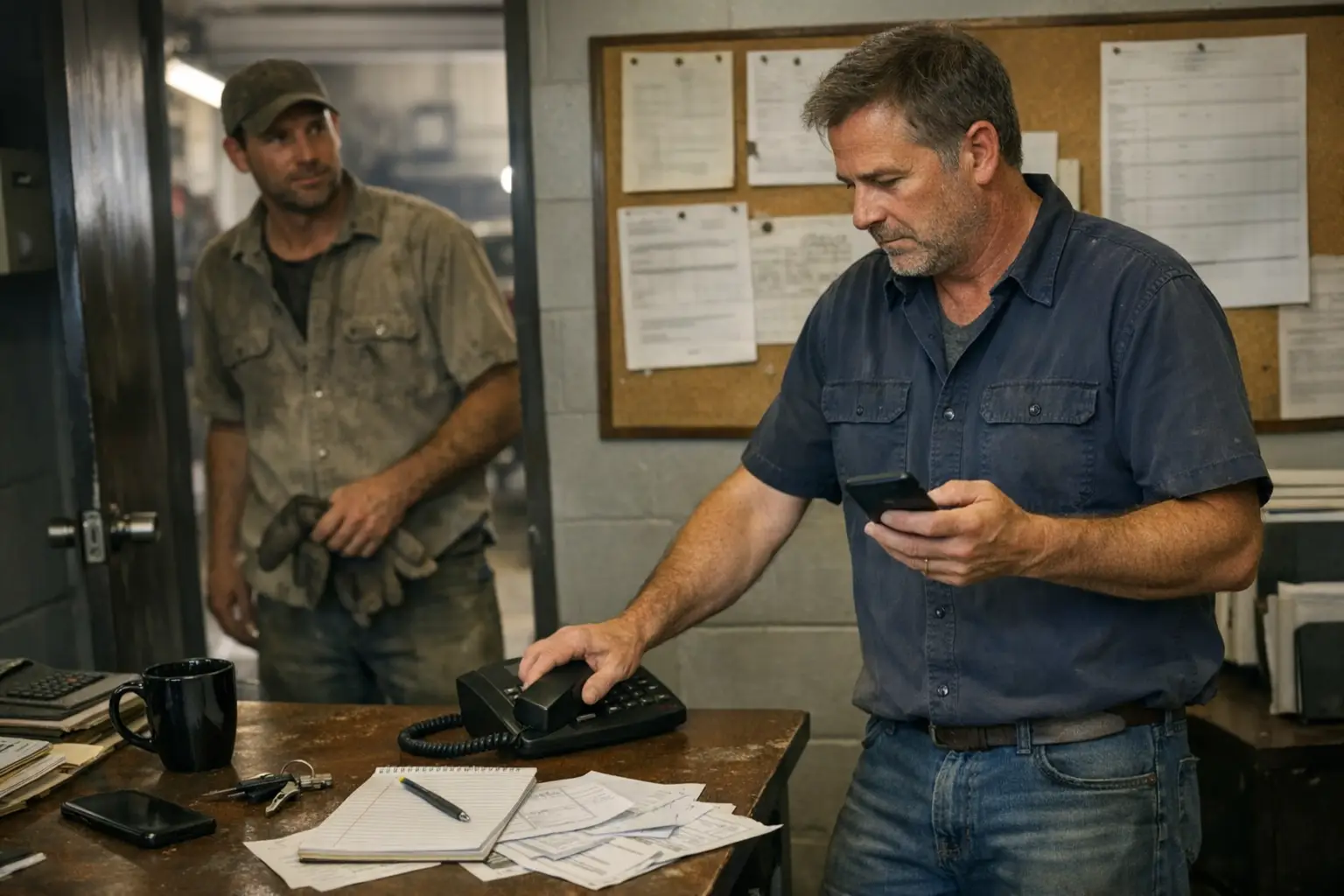
Consider a small service company with one main number that rings everywhere. The office manager is busy. A tech sees the missed call between jobs. Someone else hears the voicemail later. By the end of the day, nobody knows who was supposed to call back, and the lead is gone.
A shared phone can work, but only if every inbound call has a clear owner, a visible record. A next step that can't be ignored. Without those rules, one number creates false coverage. It feels safe because many people can answer it. In practice, it often hides dropped leads.
Where Shared Phone Lead Handling Breaks
Most shared-line problems come from ambiguity, not bad intent. Plenty of shops have good people answering the phone. Trouble starts after the first miss, partial answer, or handoff. If your team doesn't know who owns the lead at each stage, callers slip between devices and people.
That shows up in very normal moments. Lunch break hits. A roofer is on a ladder. A locksmith is driving to a lockout. The office person is taking payment from another customer. Everyone assumes someone else will handle the new caller. No one means to drop the lead, but that's what happens.
A second issue is that shared access gets mistaken for process. Ringing six phones at once isn't a system by itself. Neither is a shared voicemail box. Both create activity, but neither creates accountability unless your team has rules for capture, assignment, and follow-up.
Missed voicemails in shared phone lead handling
Voicemail feels like a backup plan. In many shops, it's just storage.
A message lands in one inbox. One person listens but forgets to note it. Another sees the notification and assumes the first person called back. Later, dispatch can't tell whether the customer asked for same-day help, estimate follow-up, or after-hours service. The message exists, but the job doesn't move.
The fix is simple in concept and strict in practice. Every voicemail needs to become a trackable item with one owner and one deadline for response. If your team leaves messages sitting inside the phone app, you're asking memory to run your sales process.
Visibility matters just as much as speed. Notes should live where everyone handling calls and scheduling can see them. Otherwise you get split records, duplicate callbacks, or worse, a tech texting from a personal phone while the office still thinks no contact was made.
Slow callbacks lose urgent service jobs
Some jobs can wait a bit. Many can't.
Think about garage door service, plumbing leaks, restoration calls after water damage, or pest issues that feel urgent to the homeowner even if they aren't an emergency on your side. When response slows down, callers usually don't sit patiently by the phone. They keep calling down the list until someone answers clearly and gives them a next step.
Delay also creates weaker conversations when you finally do connect. The customer has repeated the problem twice already and may be annoyed before your team even starts qualifying the lead. That makes booking harder than it needed to be.
One pattern shows up often in shared-phone setups: somebody answers live but can't finish the job because they need schedule approval or scope review. Then ownership goes soft. The caller wasn't missed exactly, but they still weren't moved forward. That's why "answered" and "handled" should never mean the same thing on your call log.
Rules that keep one number accountable
The minimum workable model is not fancy. Every inbound call needs three things: capture, owner, next action. If any one of those is missing, your shared number becomes risky during busy hours.
Start with one rule your whole team can repeat: every new inquiry belongs to one named person or one clearly defined queue until it's booked or closed out. Not "the office." Not "whoever heard it." One owner. If that owner can't finish it, they reassign it visibly instead of mentioning it in passing.
Then define what counts as complete handling. For most home service shops. Means at least four pieces of information are captured right away: contact details, service need, area served, and urgency level. Once those basics are logged in one place, handoffs get cleaner because nobody has to reconstruct the call from memory.
Clear ownership for every shared phone lead handling step
Ownership has to continue past first contact. That's where many teams get loose.
Suppose a cleaning company gets a call during business hours and answers live. Needs to confirm crew availability before booking. Or an appliance repair shop needs model details before setting an appointment window. Who owns follow-up then? If your answer is "we all keep an eye on it," you've found the leak.
A stronger setup uses stage-based ownership. One person owns first response. Another can own scheduling if needed. But each transfer must be explicit and visible inside your system or call log (not stuck on paper by the front desk). That way managers can see orphaned leads fast instead of finding them days later through silence.
Queues can work too, but only if someone is accountable for watching them within your response window. A queue without acknowledgement rules is just shared responsibility wearing nicer clothes.
Text back missed callers before they move on
A missed-call text-back helps most when it buys time without creating confusion.
The message should do three things well: confirm you got the call, invite a reply with basic job details, and set expectation for follow-up. Short beats clever here. If someone called about a backed-up drain or a broken opener, they want proof their effort didn't vanish into voicemail.
Still, texting back isn't enough on its own (that's where teams fool themselves). If replies land in an unattended inbox or only on one employee's device, you've added another place leads can die. The text thread needs an owner just like voicemail does.
Consent and recordkeeping matter too. Keep follow-up texts tied to your business workflow so notes stay visible to scheduling and office staff later on.
What to fix first in shared phone lead handling
Don't start with more tools if you haven't mapped your weak spots yet. Most shops already know where pain shows up: mornings before dispatch settles down, lunch coverage gaps, after-hours overflow. Partial handoffs between field staff and office staff.
A quick review usually tells you plenty. Pull recent missed calls and voicemails from a typical week (not just your best day). Look for four failure points: no callback logged, duplicate callback attempts, notes stored outside your main system. Calls marked answered with no clear next action after them.
Consider a hypothetical painting company using one main number across two office phones and several mobiles. Calls ring everywhere, which seems helpful at first. But if one estimator texts from his own device while the office leaves a voicemail later, nobody sees one clean thread of what happened next.
That kind of mess is why structured actions matter more than telecom features alone. Petunia handles the parts that usually break under shared coverage: answering and qualifying calls, texting back missed callers, booking jobs. Following up on estimates so opportunities don't sit untouched between people or devices.
Map handoffs and edge cases before adding tools
Write down your actual path for five situations: live answer and book; live answer but needs callback; missed call; voicemail left; after-hours inquiry that wants next-day service rather than emergency help. If any path ends with "someone should follow up," it's not finished yet.
Edge cases tell you whether your setup is safe enough to keep. What happens when two people call back the same lead? What happens when no one does? What happens when a tech answers while driving later and forgets to update dispatch? Those are operations problems before they're software problems.
For developers building around a shared number, this map becomes your action list: capture every contact attempt, route by clear logic, assign ownership when unresolved, store notes in one persistent record, then escalate if no human action happens inside the agreed window.
If you want one place to test that model in practice, Petunia gives home service teams those actions directly through calls and texts (and developers can use the same actions through its API). The goal isn't more phone activity. It's fewer dropped opportunities from one busy number. Start your free trial.
You Might Also Like
- How to Hand Off a Qualified Caller to Dispatch
- After-Hours Lead Handling for Small HVAC Teams
- What Counts as a Qualified Service Lead?
- What Should Happen After a New Lead Comes In?
- After-Hours Call Handling for Electricians
Talk to Petunia
Every call you miss while your crew is on a job is a job someone else books. Petunia answers and qualifies your calls, texts back missed callers, books jobs, and follows up on open estimates, so home services owners (plumbers, electricians, roofers, pest control, landscapers, cleaners and more) stop losing revenue to slow response.
Your team keeps working the way it does today. Petunia handles the calls and follow-ups that slip through when everyone is busy, and developers can trigger the same actions through an API.