Service Appointment Scheduling Workflow: A Practical Guide
service appointment scheduling workflow for same-day calls, so you book the right job, protect the board, and keep promises on time.
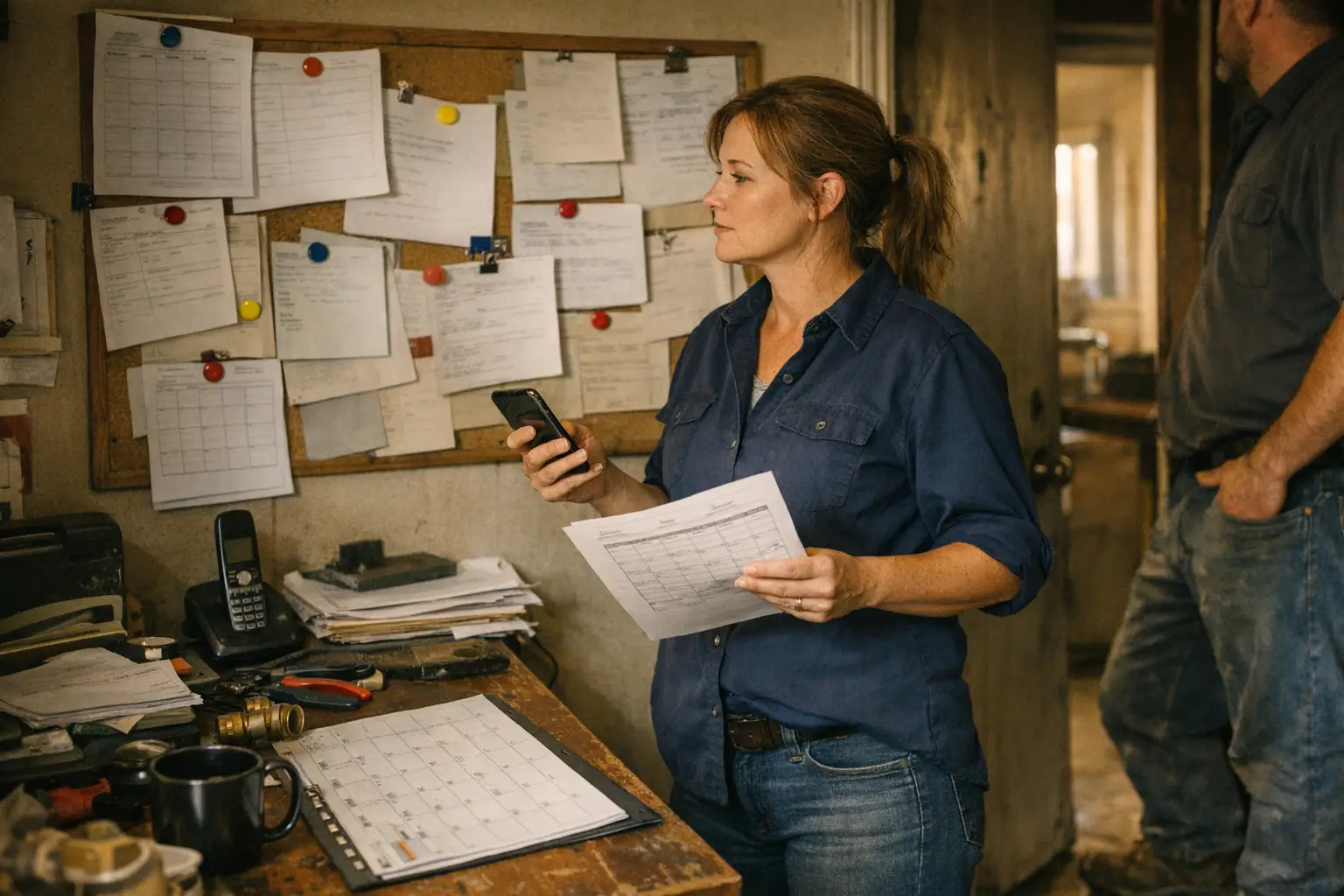
Should you book that new same-day call, or protect the jobs already on the board?
Yes, you should take same-day work, but only when your calendar rules decide fit before speed. The best setup checks urgency, route, skill match, job type, and confirmation before anyone promises an arrival window. That keeps today's revenue from turning into today's mess.
Same-day booking rules that protect the day
Most shops don't get in trouble because they offered same-day service. They get in trouble because they offered it with weak rules. A blank spot on the calendar is not real capacity if the tech has a long drive next, lacks the right part, or isn't the best fit for the job.
Good same-day rules answer three things fast. Can we do it today? Who should take it? What window can we promise without hoping for a perfect day? If your team can't answer those in a few minutes, the workflow is too loose.
Consider a hypothetical plumbing shop. The office sees an open gap at noon and books an urgent drain call. By lunch, the morning diagnostic runs long, traffic builds, and the new customer calls asking where the tech is. Nothing unusual happened. The rule failed because it treated white space like usable time.
When to offer same-day service at all
Offer same-day service only when the job clears a simple triage screen. Intake should confirm urgency, location, property type, access limits, likely task, and any clue about tools or parts. Without that, dispatch is guessing before the truck even moves.
Some jobs sound easy and aren't. A clogged line may be in a commercial kitchen with tight access hours. A locksmith call may be urgent but still need screening for entry details and timing. A cleaning request after a cancellation might fit nicely. Only if the crew can reach it without breaking the rest of the route.
Your cutoff time matters too. Every shop needs a latest point for adding work without wrecking existing promises. Keep an exception path for true priority calls, but make it a real exception. If every late request becomes urgent, your cutoff means nothing.
How service appointment scheduling workflow sets capacity
The strongest calendars reserve some true same-day capacity instead of waiting for random gaps. That can be one protected block, a few shorter holds, or limited windows by territory. The form matters less than the discipline.
Release rules are just as important as hold rules. If demand doesn't show up by a set checkpoint, release part of that reserved time to other work. Without that step, protected capacity turns into idle time. Without protected capacity at all, same-day bookings spill into every corner of the day.
Appointment templates help here more than most teams expect. A garage door spring issue should not sit in the same time box as a quick opener check unless your history says they behave alike. Standard durations create honest capacity. Guesses create fake availability.
Service appointment scheduling workflow for dispatch
Dispatch works best when booking logic matches field reality. The next open slot is rarely the right answer by itself. Same-day jobs should go to the person whose route can absorb them cleanly and whose truck and skill set fit the work.
That usually means geography beats empty screen space. A nearby tech with a slightly later opening often causes less disruption than sending someone across town now. Many boards look efficient at 9 a.m. and fall apart by 1 p.m. because they ignored drive time early.
Skill match, drive time, and job type rules
Start with skill match, then check route fit. Availability comes after that. Speed feels helpful in the moment, but wrong-tech assignments create expensive delays later in the day.
Take a hypothetical garage door company. A caller reports a door stuck halfway open. If intake books whoever looks free first, dispatch may send a newer tech who isn't set up for that repair alone. Now you've lost travel time once and may lose it again on a return visit.
Travel buffers need to live inside calendar rules, not in someone's head. Back-to-back jobs only work if they are actually close enough and simple enough to stay back-to-back. For pest control, pool service, appliance repair. Locksmith work alike, small route mistakes stack fast because each stop depends on the one before it.
Promises your build a repeatable booking workflow can keep
Customers usually handle honest windows better than hopeful ones. Trouble starts when the office offers tight times based on best-case timing while dispatch knows the route has no slack left.
Build customer promises around what must happen before arrival: prior job length, drive buffer, confirmation status, and who is assigned. Then tie messages to those milestones so everyone sees the same status. If dispatch updates one system while the customer hears nothing, your team spends the afternoon answering avoidable calls.
Confirmation windows matter more on same-day work than on future bookings. If someone wants service today but won't confirm quickly, your team needs permission to release that slot and move on. That rule protects both revenue and route quality.
Where the workflow breaks under real demand
Most breakdowns start before dispatch clicks assign. Intake skips questions because phones are ringing fast. The calendar allows any opening to look bookable. Then field crews inherit bad information and impossible ETAs.
Busy days expose weak rules fast (and painfully). One overlong diagnostic visit pushes two more appointments late. One cross-town add-on burns an afternoon window you thought was safe. Loose workflows don't fail all at once. They fail one small assumption at a time.
Loose calendar rules in booking rules that reduce scheduling conflicts
The biggest problem is often optimistic capacity dressed up as availability. If every slot assumes perfect parking, no overruns, stocked trucks. Instant customer confirmation, then your board is lying before noon.
Another common break is treating all appointment types as equal units of time. They aren't. Restoration screening is not the same as routine cleaning touch-up work. Appliance repair with likely parts needs should not flow through like simple handyman tasks with flexible scope.
Watch for soft ownership too. If nobody has clear authority to reassign jobs when delays hit, small issues turn into long phone chains and silent customers waiting at home. Good fallback rules name what happens next before anything goes wrong.
Get started with Petunia
Every call you miss while your crew is on a job is a job someone else books. Petunia answers and qualifies your calls, texts back missed callers, books jobs, and follows up on open estimates, so home services owners (plumbers, electricians, roofers, pest control, landscapers, cleaners and more) stop losing revenue to slow response.
Your team keeps working the way it does today. Petunia handles the calls and follow-ups that slip through when everyone is busy, and developers can trigger the same actions through an API.
Visit Petunia to see how it works.